After the last light
Crews of the International Space Station photograph Earth through the station's windows. Five of their photographs, taken between 2001 and 2014, follow the planet from the desert by day to the aurora at night. The photographs are NASA's and in the public domain; the captions give the crew, the date, and what the frame shows.
The night side
On 2 April 2014 an Expedition 39 crew member photographed Moscow at night. The city's radial highways glow yellow at the lower left, a thin green line of the aurora borealis crosses the top, and the moon sits just above it.
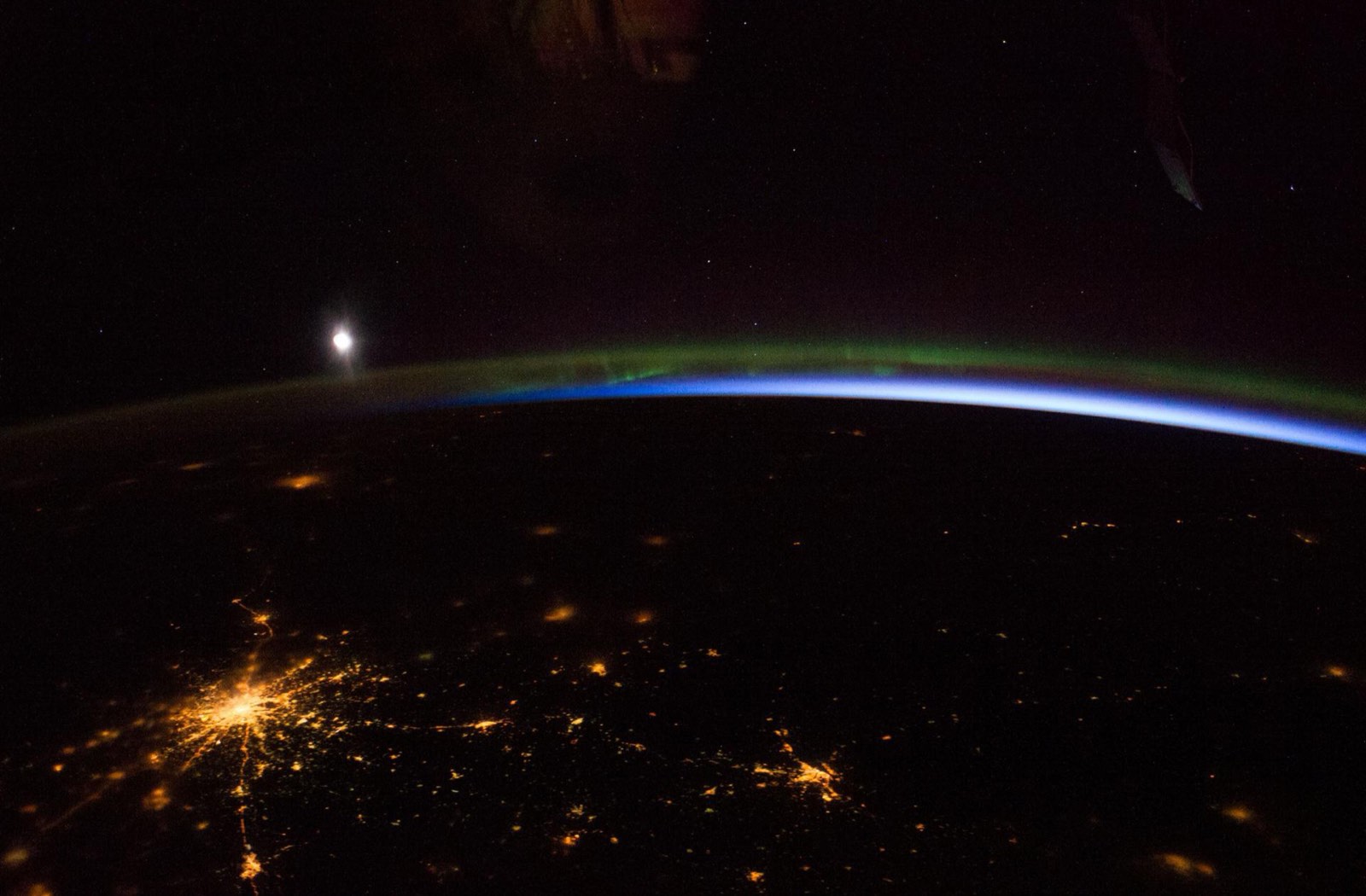
The blue-white arc along the edge of the planet is airglow. Nizhny Novgorod shows 400 km east of Moscow, and St Petersburg 625 km to the north-west.
From desert to aurora
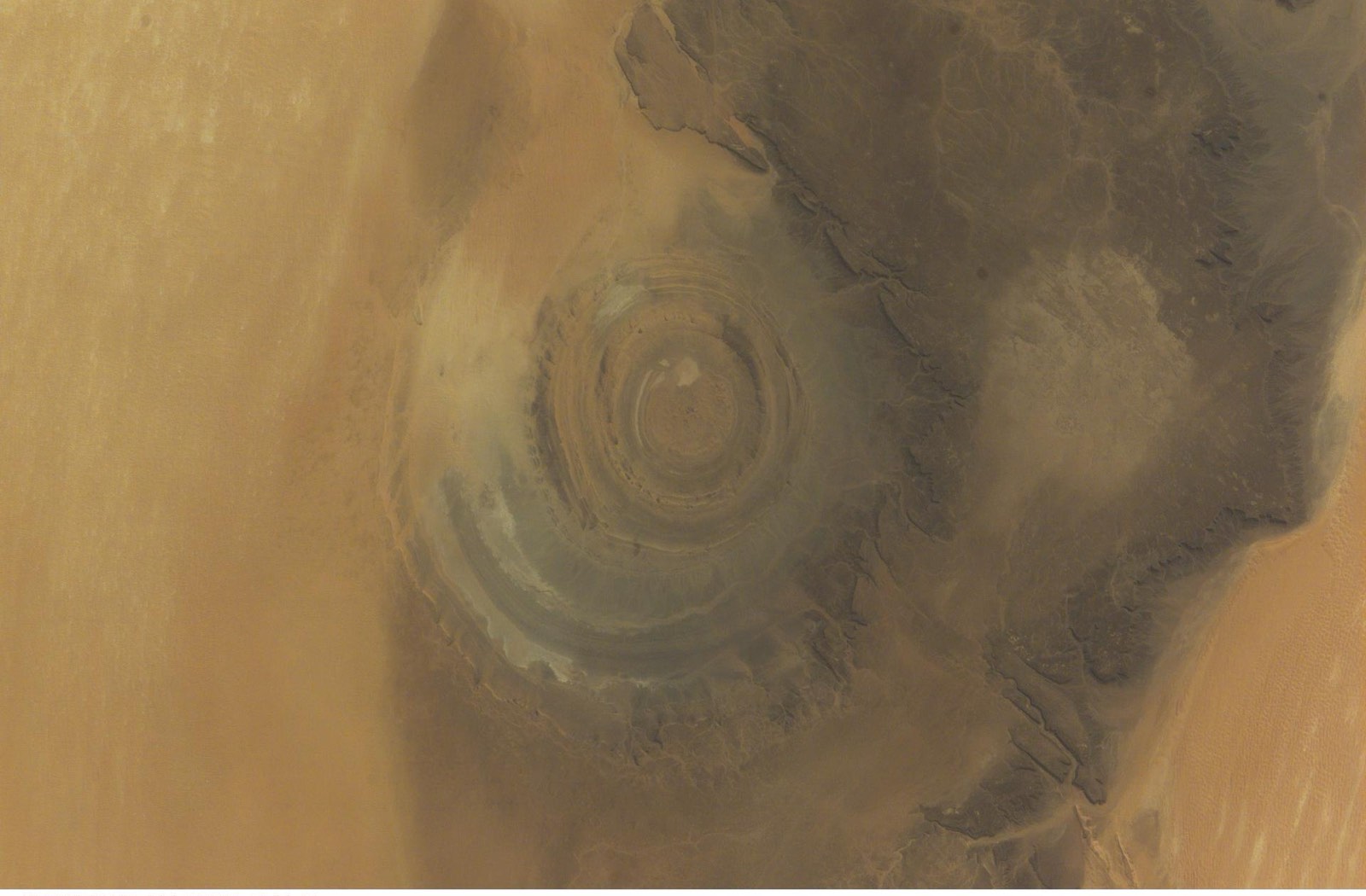
Richat Structure, Mauritania
Expedition 2 records the 40 km «bull's-eye» of uplifted, eroded rock on the Chinguetti plateau.
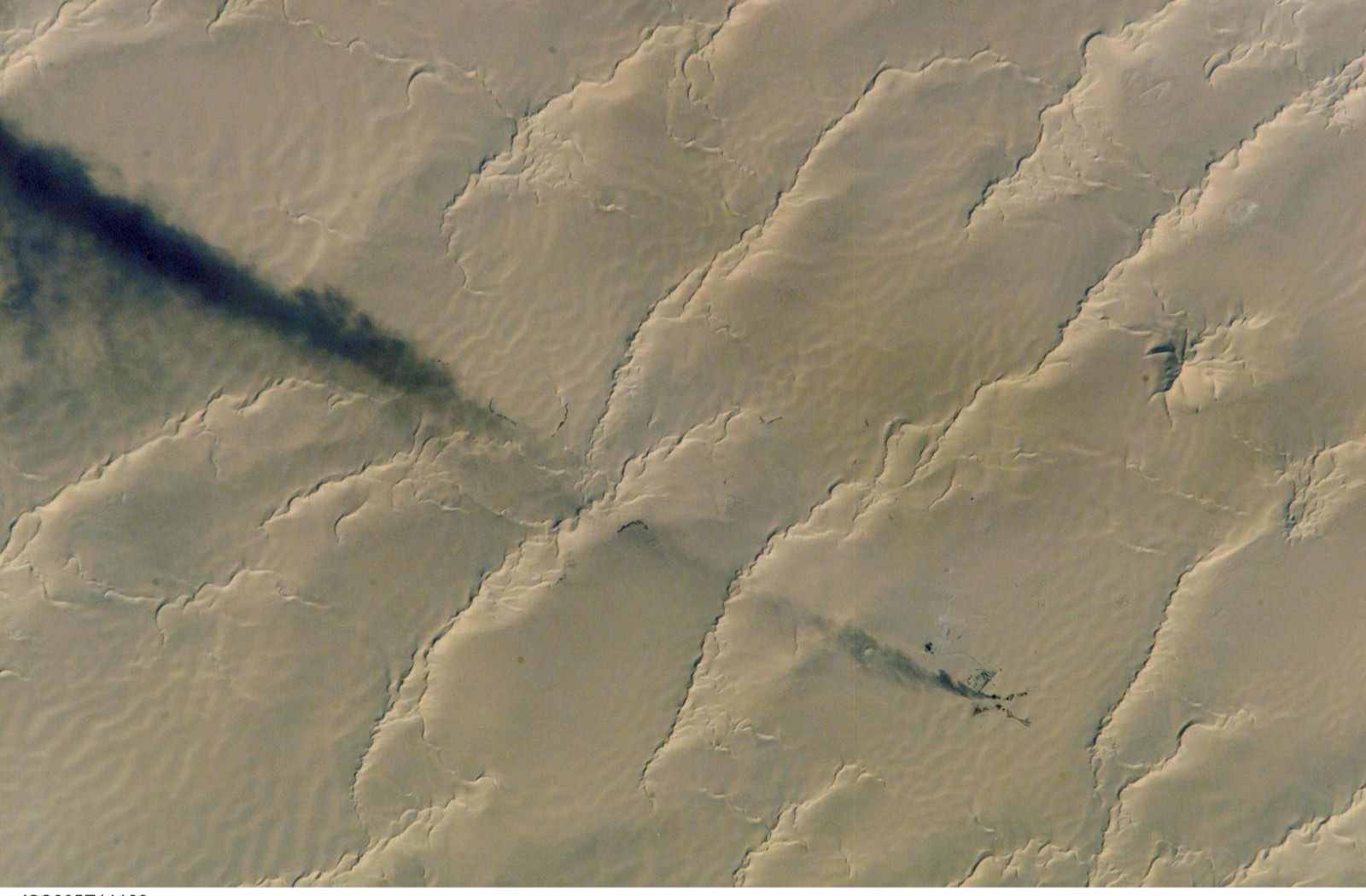
Calanscio Sand Sea, Libya
Expedition 5 sees black smoke from a well-head flare drifting west across the linear dunes.
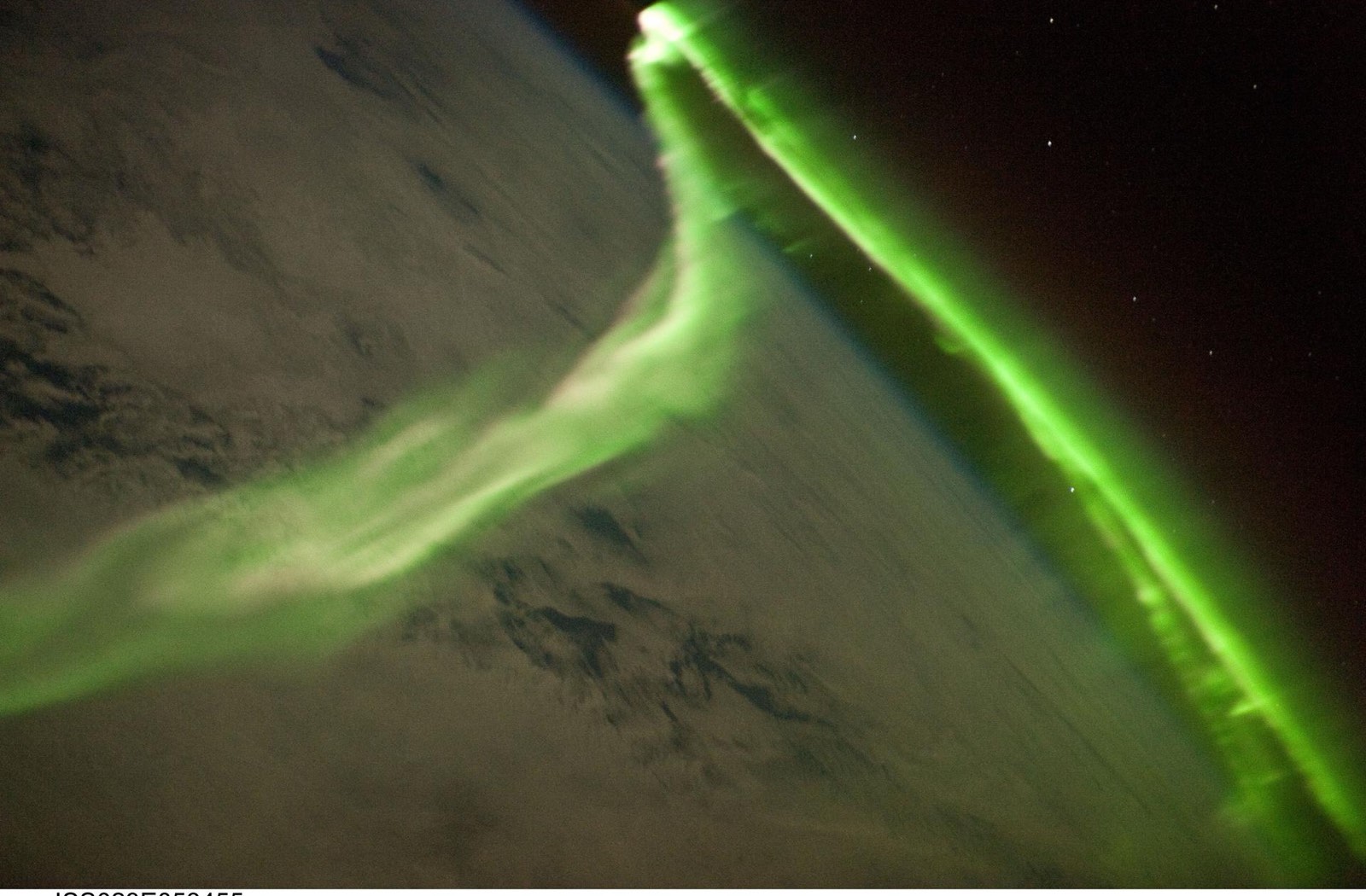
Aurora australis
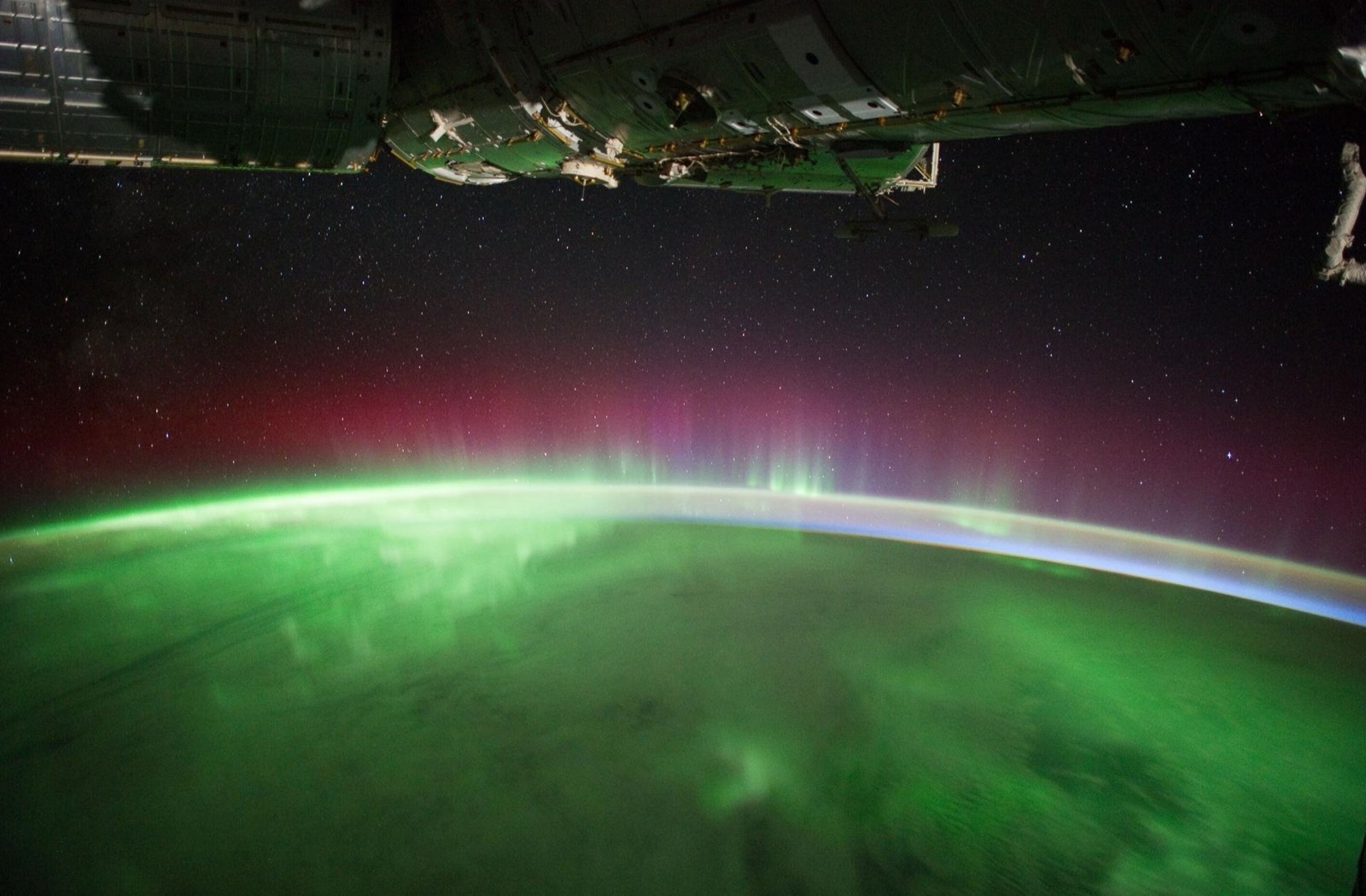
Aurora
Expedition 23 photographs the southern lights as green curtains below the station.
Moscow, aurora and moon
Opening photo
Expedition 39 frames a city, an aurora and the moon in one night exposure.
- Aurora
- Opening photo
Frames
How far away
About 390 km
Height of the station above Earth in 2012, as Expedition 31 engineer Don Pettit gave it (about 240 miles).
40 km across
Width of the Richat Structure; its rings sit about 90 m below the plateau around them.
625 km
Distance from Moscow to St Petersburg, both lit in the 2014 night frame.
Sources: the NASA Image and Video Library records ISS002-E-5457, ISS005-E-11189, ISS023-E-058455, iss030e119777, ISS039-E-009160 and jsc2012e039800, which give the dates, places and measurements above.